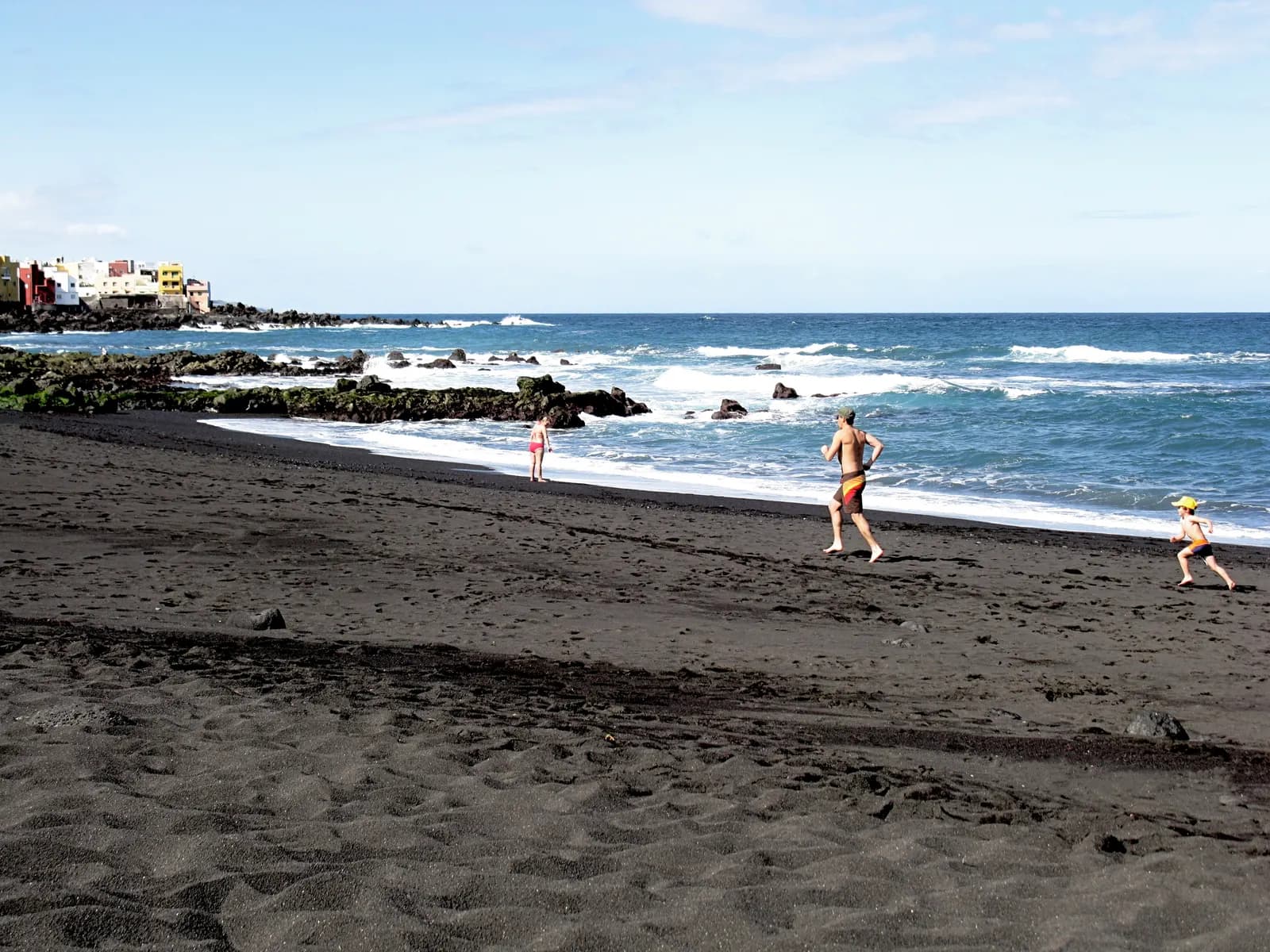
A workation with kids isn't a solo workation with the children packed in your luggage. It's a different product. The workday is shorter, the accommodation bigger, and the choice of place depends on childcare instead of coworking. If you accept that, four to eight weeks abroad are very doable. If you think you can simply extend solo mode by two kids, you'll come back exhausted. Here's what has proven itself.
The basic maths: childcare is the bottleneck
One parent can't work eight hours while the other looks after the kids for eight hours, and then swap. There aren't enough hours in the day, and the kids aren't keen on two tired parents. Three models are realistic:
| Model | Working time per parent | What it suits |
|---|---|---|
| Both work, child in childcare (school, nursery, camp) | 6 to 8 h | School-age children, stays of 4 weeks or more |
| Shift model without childcare | 4 to 5 h | Toddlers, short stays, part-time |
| One parent works, one looks after the kids | 8 h / 0 h | Parental leave, partner's sabbatical |
The shift model sounds fair, but it's the most exhausting. If you choose it, limit the stay to two or three weeks and plan for part-time work or holiday days.
Compulsory schooling: the point many people skip
In Germany, school attendance is compulsory (Schulpflicht), and it doesn't end at the airport. Getting your child excused from lessons for several weeks is possible, but it's at the school's discretion and, depending on the federal state, only with good reason. Sort this out in autumn for the spring, not three weeks beforehand. Primary schools are usually more relaxed than secondary schools; final exam years are practically off-limits.
For nursery-age children it's easier: the place stays, and so does the fee. For children aged three and up, most workation destinations have childcare in English, often bookable by the day or week.
Places where it works
Good family workation destinations have four things in common: international or English-speaking schools that take short-term pupils, paediatricians with appointments within days, two-bedroom apartments at affordable prices and surroundings where kids can be outdoors.
- Canary Islands (Las Palmas, south Tenerife): Several international schools, mild winters, the beach as a playground, EU legal framework. Two-bedroom apartments from around €1,400 for four weeks (2026), scarce in winter.
- Algarve and the Lisbon area: International schools in Lagos, Vilamoura and Cascais, lots of Northern European families in winter. More expensive than the Canaries, but better connected.
- Valencia and the coast around Alicante: Schools, paediatricians, a city beach, the same time zone. Valencia is a real city with parks and cycle paths, which makes everyday life easier.
- Bali (Canggu, Ubud): Lots of international schools with short-term programmes and family colivings. But: a twelve-hour flight, a seven-hour time difference in winter, tropical diseases. Worth it from eight weeks, not for less.
- Chiang Mai: International schools, cheap, child-friendly. The smoke season from February to April practically rules it out for families.
Family colivings are a young category: houses with several family apartments, a shared coworking room and childcare in the mornings. You'll find them in the Algarve, on Tenerife, on Bali and here and there in Italy. Prices in 2026: €2,500 to €5,000 for four weeks including childcare, often with a waiting list during the winter holidays.
The rhythm that holds up
Working early in the morning while the kids are in childcare is the best time: focused, few meetings, no distractions. The second block comes after dinner. In between is family time, and it shouldn't happen with a laptop on your lap. Kids notice whether you're really there.
What helps: fixed office hours the kids know ("Mum is working until the alarm goes off"), a workspace with a door, a weekly plan on the wall. And an agreement with your team that there are no meetings between 2 pm and 5 pm.
What doesn't work
- More than one change of place per month. Kids need two weeks to settle in. If you move on every ten days, you constantly have kids who don't sleep.
- One-bedroom accommodation. The child goes to sleep at 8 pm, and you work in the dark in the hallway. Two bedrooms are not a luxury.
- "Organising childcare on site". If you arrive without booked childcare, you spend the first week looking for it. Book in advance, even if it costs more.
- Long-haul trips under six weeks. Jet lag in kids lasts a week in each direction. With a four-week stay, two of them are adjustment.
- Expecting it to be cheaper than at home. Childcare, a bigger apartment, kids' flights: in 2026, a family workation in Southern Europe realistically costs €4,000 to €7,000 per month. It's not a way to save money, it's a way to live.
If you can live with that, you get something no holiday delivers: kids who spent four weeks outdoors every day, and parents who still got their work done.